About Course
This comprehensive CIMA E3 (Strategic Management) course has been designed to provide you with everything you need to understand the syllabus, develop strategic thinking skills, build confidence, and pass your examination on your first attempt. Whether you are studying E3 for the first time or revising after a previous attempt, the course provides a structured learning path that takes you through every topic in the CIMA E3 syllabus in a clear, practical, and exam-focused manner.
Each chapter is explained in detail using professional lecture notes and engaging pre-recorded video lectures, ensuring that even the more complex strategic management concepts become easier to understand and apply. The course combines strategic theory with practical business application, helping you develop the knowledge, analytical skills, and exam techniques required to succeed.
Particular emphasis is placed on understanding how organisations develop and implement strategy, analyse their competitive environment, evaluate strategic options, manage strategic change, and create sustainable value. You will also develop the ability to apply strategic frameworks and concepts to real-world business situations and exam scenarios.
Choose this course if you want a complete, all-in-one resource to master the CIMA E3 syllabus, strengthen your strategic thinking, and maximise your chances of passing at your first attempt.
What you’ll receive in this course:
- Comprehensive lecture notes for every chapter, covering the entire CIMA E3 syllabus.
- Pre-recorded video lectures for every chapter, allowing you to learn at your own pace and revisit difficult topics whenever needed.
- Professionally prepared chapter presentation slides to reinforce key strategic concepts, models, and frameworks.
- Flashcards summarising important theories, strategic models, definitions, frameworks, and examinable concepts for quick and effective revision.
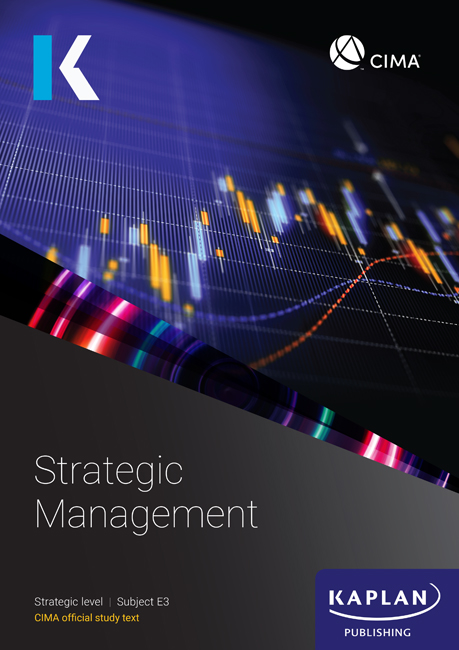
- The Kaplan Study Text, providing detailed explanations, illustrations, examples, and activities aligned with the latest CIMA syllabus.
- The Kaplan Exam Practice Kit, packed with exam-standard questions and detailed solutions to help you apply your knowledge and improve your exam technique.
This course is ideal for students who want a well-organised, high-quality learning experience with comprehensive resources to help them understand strategic management, apply strategic concepts to business situations, and successfully complete the CIMA E3 examination.
Course Content
CHAPTER 1 – THE STRATEGY PROCESS
-
Part A: Introduction & Background
-
Part B: Section 3 to 5
-
Part C: Section 6 to 8
-
Part D: Section 9 to 15 (Summary, application and practice)
CHAPTER 2 – Generating Strategic Options: Mission, Vision, Values and Stakeholders
CHAPTER 3 -THE ROLE OF GOVERNANCE AND ETHICS IN THE STRATEGY PROCESS
Student Ratings & Reviews